
Window tintCalifornia Window Tint Law
What California allows on a car, in plain words — and the law itself, word for word.
How dark can you tint in California?
What the law allows on a car, glass by glass: clear at the front, a strip on the windshield, any shade behind you.
- Front side windowsClear film onlyClear UV film that keeps the window at 70% or more.
- WindshieldA strip along the topIts bottom edge at least 29 inches above the driver’s seat.
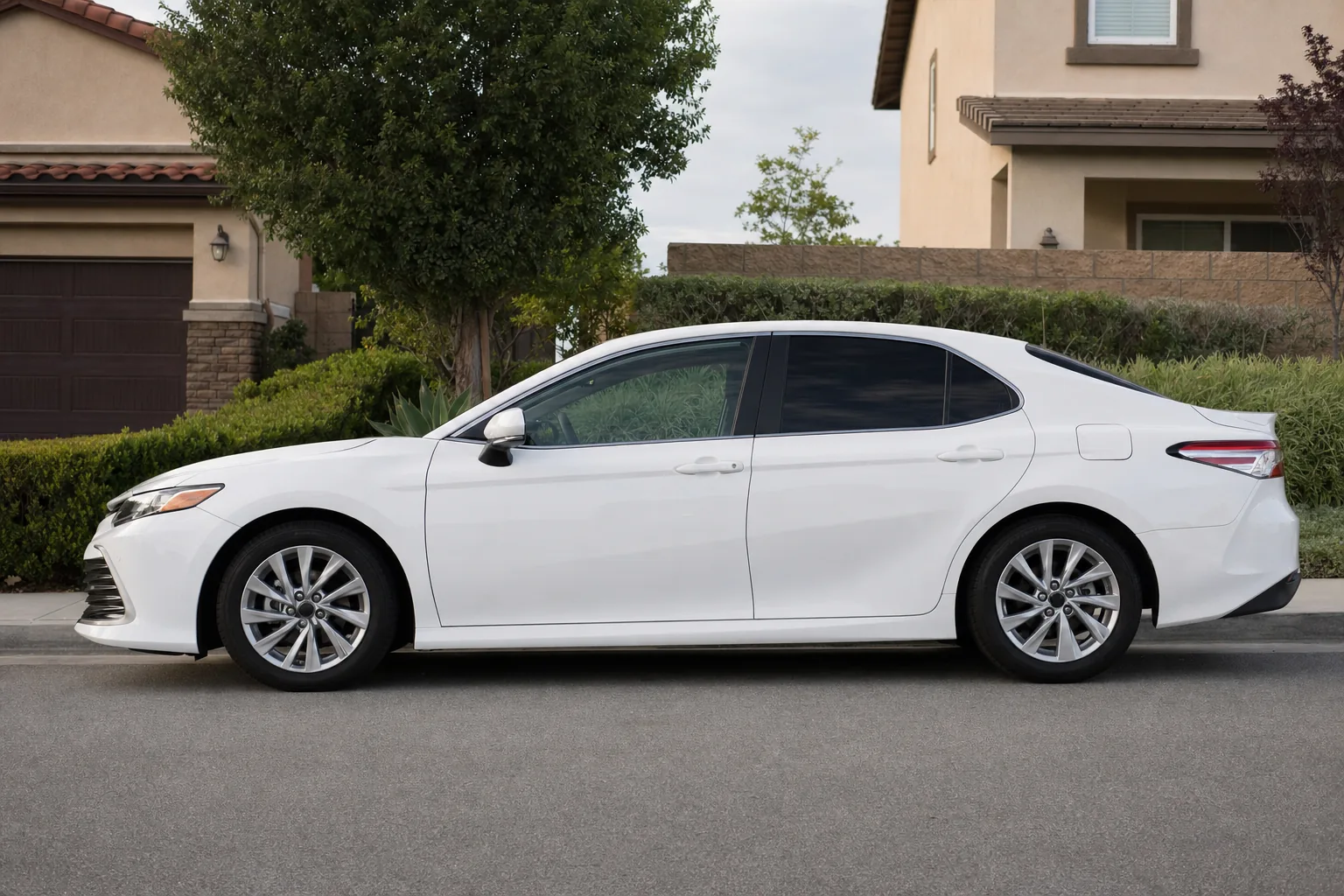
- Behind the driverAny shadeRear side windows, and the rear window with mirrors on both sides.
California tint law for each window
For cars on California roads, as Vehicle Code §26708 reads from 1 January 2026.
| Front side windows | Clear UV film onlyClear, colorless film that lets 88% of light through and keeps the window at 70% or more, with the installer’s certificate in the car. A medical exemption letter can allow more. |
|---|---|
| Rear side windows | Any shadeSide windows behind the driver can be any shade. |
| Rear window | Any shadeAs long as the car has outside mirrors on both sides. |
| Windshield | A strip along the topTransparent film on the topmost part only, its bottom edge at least 29 inches above the driver’s seat; never red or amber. |
| Mirrored or glaring film | Not allowedFilm on the windshield can’t reflect more glare than the bare glass. |
California Vehicle Code §26708 (amended by Stats. 2025, Ch. 417, SB 506, effective January 1, 2026), as read on 3 October 2026: “(b) This section does not apply to any of the following: … (4) Side windows that are to the rear of the driver. … (8) The rear window or windows, if the motor vehicle is equipped with outside mirrors on both the left- and right-hand sides of the vehicle that are so located as to reflect to the driver a view of the highway through each mirror for a distance of at least 200 feet to the rear of the vehicle. … (c) … transparent material may be installed, affixed, or applied to the topmost portion of the windshield if the following conditions apply: (1) The bottom edge of the material is at least 29 inches above the undepressed driver’s seat … (2) The material is not red or amber in color. … (4) The material does not reflect sunlight or headlight glare into the eyes of occupants of oncoming or following vehicles to any greater extent than the windshield without the material. (d) … clear, colorless, and transparent material may be installed, affixed, or applied to the front side windows … if … (1) The material has a minimum visible light transmittance of 88 percent. (2) The window glazing with the material applied meets all requirements of Federal Motor Vehicle Safety Standard No. 205 … including the specified minimum light transmittance of 70 percent … (4) The driver has in their possession, or within the vehicle, a certificate signed by the installing company …”
This is a guide, not legal advice — we check your car and your shade against the law before we cut.
See window tint on your own car
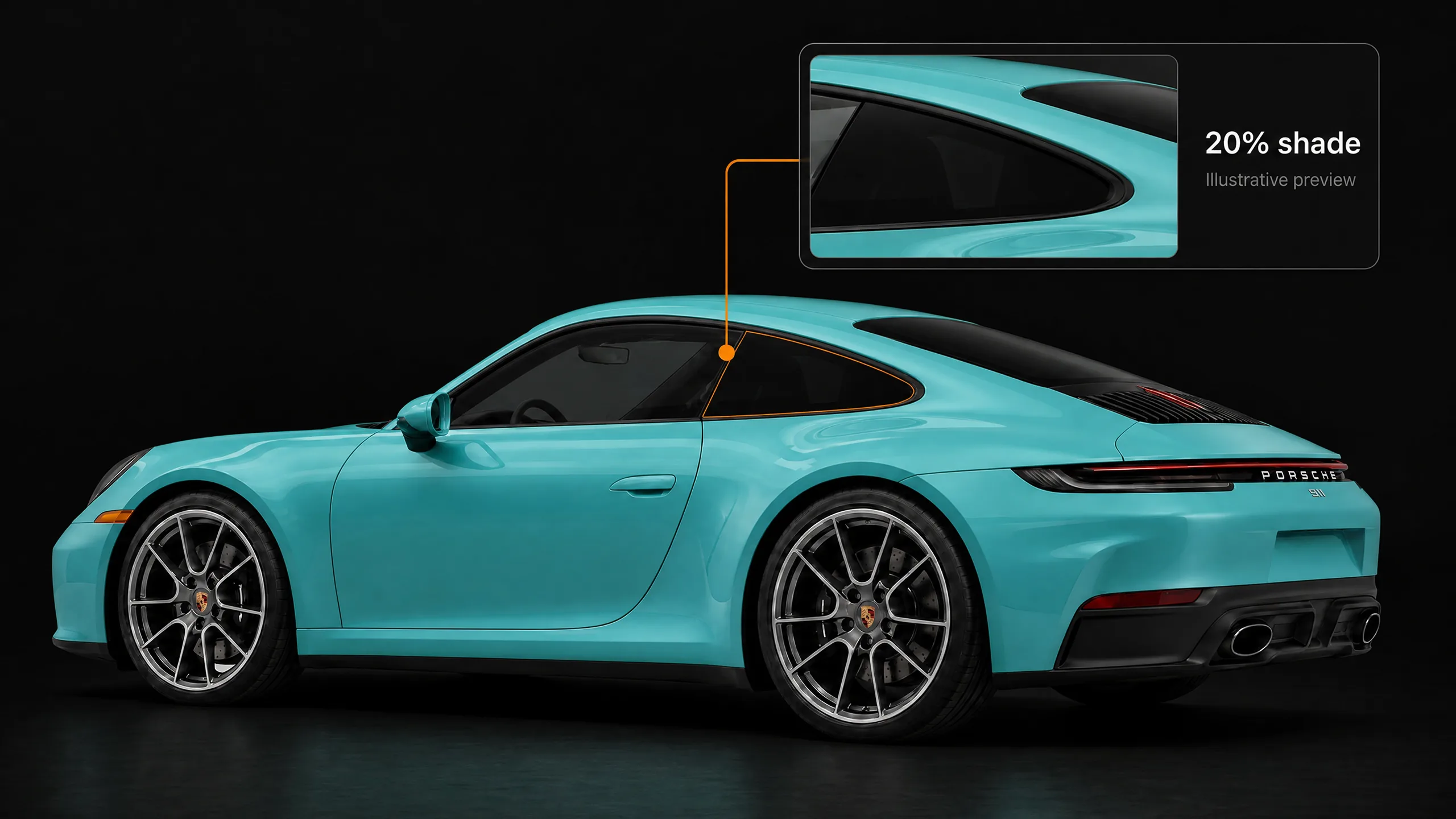
Pick your car, then slide from dark to light through every Kepler shade — and see the look from the front and the side.
- Nebula 04
- Helios 20
- Equinox 33
- Stratum 50
- Photon 72
Kepler’s shades, darkest to lightest. Photon 72 comes in IR+ only.
Choose your vehicle
See your car in a new shade.
Choose your make, model and year to start exploring window tint on your vehicle.
Illustrative vehicle preview
Screen illustrations are a guide, not measured VLT. Existing glass affects the result; legal requirements depend on your vehicle, window and location.
California tint law questions
Between one and five hours depending on the vehicle. We use an appointment system, so your car isn’t rushed through like a production line.
Kepler’s lifetime warranty on the films we fit covers cracking, bubbling, delamination and fading for the life of the film — if anything goes wrong, bring it straight back to us.
No. Factory tint is a pigment in the glass and does little for heat or UV. Kepler film goes on the glass and adds UV protection, heat reduction and glare reduction.
Any shade behind the driver, and on the rear window when the car has mirrors on both sides. The front side windows can only take clear UV film that keeps them at 70% or more, unless you have a medical exemption. Our California tint law page has the details.
Get a free quote
Tell us about your car or your windows. Our quote system is open around the clock — we’ll come back with a clear price fast.
(949) 227-9932- Monday – Saturday9am – 6pm
- SundayClosed